Ekiti Begins Renewed Push Against Femicide, First Lady, Oyebanji Urges Collective Action Against Human Trafficking, GBV
By Yemi Olajutemu
ADO EKITI
The First Lady of Ekiti State, Dr Olayemi Oyebanji, has called for a united and sustained effort by government, security agencies, legal practitioners, health workers, the media, traditional and religious institutions, youths and other stakeholders to end human trafficking, femicide and gender based violence in the state.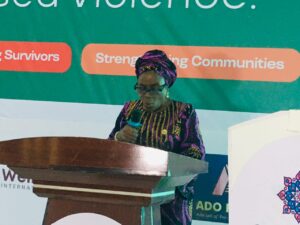
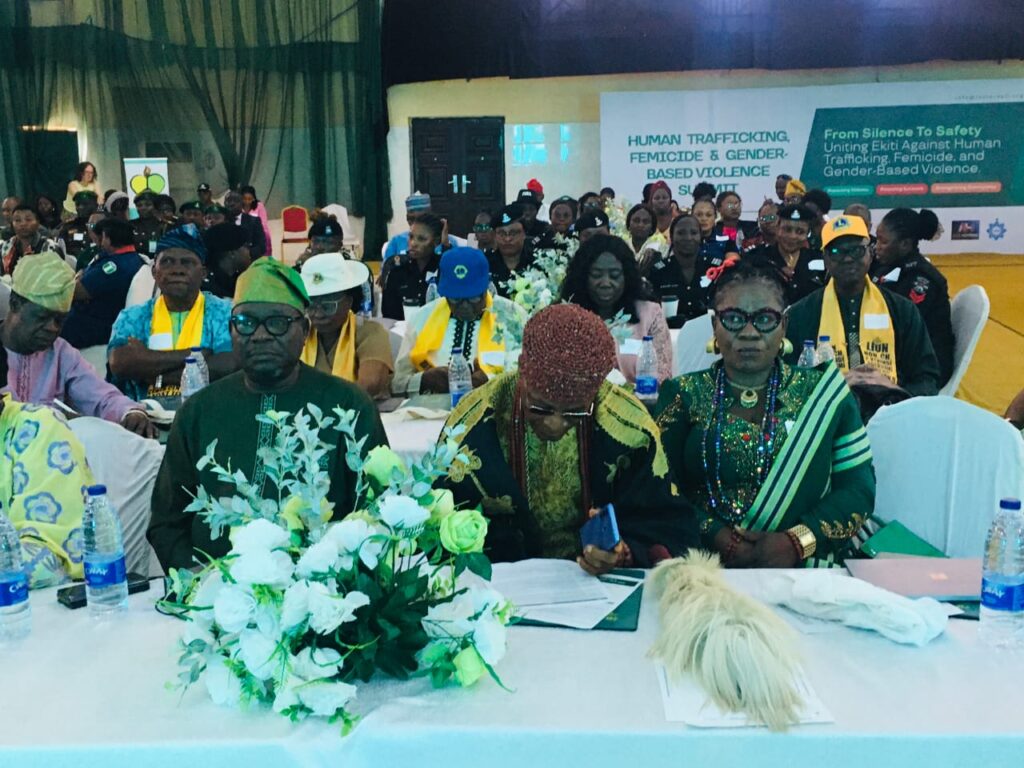
Oyebanji made the call in a keynote address delivered on her behalf by the Ekiti State Commissioner for Women Affairs, Mrs Olapeju Babafemi, at a summit on Human Trafficking, Femicide and Gender Based Violence organised by Restoration for All on Monday at the Adetiloye Hall, Basiri, Ado Ekiti.
The summit, which brought together stakeholders from different sectors of society, was held under the theme, “From Silence to Safety: Uniting Ekiti Against Human Trafficking, Femicide and Gender Based Violence,” with the focus, “Preventing Violence, Protecting Survivors and Strengthening Communities.”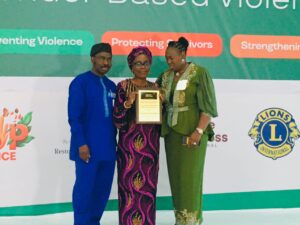
In her address titled, “Breaking the Silence, Building Safe Communities: Protecting Women, Girls and Families from Trafficking and Gender Based Violence in Ekiti State,” the First Lady described the gathering as a call to conscience and action, stressing that trafficking and gender based violence affect the very foundation of communities.
She commended the Founder and Executive Director of Restoration for All, Dr Tolulope Ola, and the organisation’s collaborating partners for their commitment to the welfare and protection of women, girls and families in Ekiti State.
Oyebanji lamented that many women and girls had suffered physical, sexual, emotional and economic abuse in silence, while others had been lured through promises of employment, education and better opportunities only to become victims of exploitation and human trafficking.
According to her, fear, stigma, shame, economic dependence, threats and the fear of not being believed had continued to prevent many survivors from speaking out.
She, however, declared that the situation must change, insisting that silence must no longer provide protection for perpetrators.
“Breaking the silence does not mean exposing survivors to further shame or danger. It means creating an environment where survivors can speak without fear, where their dignity is protected, and where they can access justice, healthcare, psychosocial support, shelter and other essential services,” she said.
The First Lady stressed the need for parents, teachers, community leaders, faith leaders and other trusted adults to become more conscious of the warning signs associated with abuse and trafficking.
She also urged stakeholders to teach children that violence could never be justified as an expression of love or discipline, while encouraging survivors to seek help without feeling responsible for the violence perpetrated against them.
Oyebanji identified human trafficking as one of the most serious violations of human dignity, noting that traffickers often exploit poverty, vulnerability, ignorance and the legitimate aspirations of families seeking better opportunities.
She said women and girls remained particularly vulnerable to sexual exploitation, forced labour, domestic servitude and other forms of exploitation.
The First Lady consequently urged families and communities to exercise greater caution over attractive offers of employment, travel, education and other opportunities, particularly when such offers could not be independently verified.
“Families must ask questions. Communities must pay attention. Institutions must strengthen prevention and referral systems. Our young people must understand that a promise of a better life should never require surrendering their freedom, dignity or safety,” she said.
Oyebanji maintained that prevention must begin with information, protection with vigilance and justice with the collective decision to refuse to look away whenever abuse occurs.
She added that protecting a girl from trafficking and exploitation was equivalent to protecting her future.
On the need to build safer communities, the First Lady described a safe community as one where women and girls could move freely, children could grow without fear, families could thrive and survivors could seek assistance without being blamed or stigmatised.
She said achieving such a society required the collective responsibility of government and citizens, stressing that government must continue to strengthen laws, policies, institutions and support services covering prevention, protection, prosecution and rehabilitation.
Oyebanji also charged law enforcement and justice institutions to ensure that survivors received justice in a manner that was sensitive, timely and respectful of their dignity.
She called on traditional and religious leaders to deploy their influence in challenging harmful practices, changing negative attitudes and promoting respect for the dignity and rights of women and girls.
The First Lady further urged parents, schools, communities and relevant institutions to create an environment where children could recognise abuse, speak up and seek assistance from trusted adults.
She stressed that the fight against trafficking and gender based violence could not be left to government alone, urging every sector of society to assume responsibility for preventing violence and protecting vulnerable persons.
Oyebanji’s message aligns with the central objective of the summit, which sought to move the conversation from awareness to concrete action by strengthening collaboration among stakeholders involved in prevention, survivor protection, justice and community mobilisation.
The gathering provided an opportunity for professionals and institutions across the legal, security, health, media and youth sectors, among others, to examine the challenges surrounding trafficking, femicide and gender based violence and explore practical approaches to making communities safer.
The First Lady called for a society in which survivors would not be silenced by shame or stigma and perpetrators would no longer exploit silence as a shield from accountability.
She said the ultimate measure of the state’s response should be the ability to prevent violence, protect victims, secure justice and restore the dignity and future of survivors.
She urged participants to ensure that the summit did not end with speeches and resolutions but became the beginning of sustained action across communities.
“Let today not end as another conference. Let it become a movement,” she urged, calling on parents, teachers, faith leaders, traditional rulers, young people, institutions and professionals to become active participants in the fight against trafficking and gender based violence.
She added: “History will not judge us by the speeches we delivered but by the lives we protected. Every action we take today has the power to save a child, restore a survivor, strengthen a family and transform a community.”
Oyebanji called on stakeholders to collectively break the culture of silence and build communities where women, girls and families could live without trafficking, violence and fear emphasizing that the State has begun a renewed push against the menace while calling for improved reporting and coordinated action to protect women, girls and other vulnerable persons.
She expressed worry, that more than 400 cases of gender-based violence had been recorded in the state within three months, describing the figure as a serious concern and urged residents to change their orientation, speak up against abuse and use the people and institutions around them to prevent violence.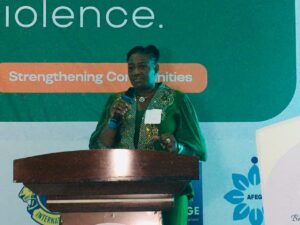
The convener of the summit and Founder/Executive Director of Restoration for All Inc., Minnesota, Dr. Tolulope Monisola Ola, said the objective was to turn conversations into practical interventions. Ola said Ekiti was deliberately chosen because of her connection with the state and her desire to complement the efforts of the state government and First Lady, adding that a research consortium had been established to collect reliable data for evidence-based interventions.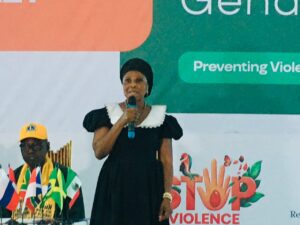
The Founder and Executive Director of Bill Wellness International Inc., Minnesota, Dr. Richard Oni, said communities must play a central role in documenting and reporting cases of trafficking and violence. He noted that economic hardship and unsafe migration could expose vulnerable people to exploitation, stressing that information gathered from communities must lead to concrete action rather than remain on government shelves or in research reports.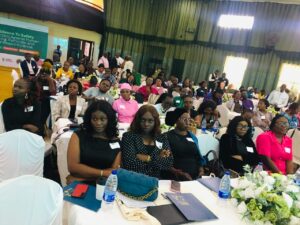
Security agencies also pledged continued collaboration to confront the menace. Representatives of the Nigeria Police Force, Nigeria Security and Civil Defence Corps, Nigeria Immigration Service, NDLEA and Nigerian Correctional Service highlighted their roles in investigation, sensitisation, prosecution and prevention. The police representative stressed that the force investigates trafficking cases beyond arrest, while immigration officials warned residents against deceptive promises of greener pastures abroad.
The summit ended with a call for residents to break the culture of silence and make reporting abuse a shared responsibility as the Chairperson of Women Journalists in Ekiti State Mrs. Adejumi, urged journalists to intensify grassroots sensitisation, including house-to-house campaigns, while participants called on families, communities, government institutions and security agencies to move from awareness to action in making Ekiti safer for women, girls and vulnerable persons.