BOUESTI Engages Stakeholders on Balanced Media Reportage of GBV, Commissioner Babafemi Calls for Concerted Effort
By Damilola Omotoso & Opeyemi Seweje
Ikere Ekiti
Discussions around Gender-Based Violence in Nigeria are taking a new shift and dimensions as institutions and stakeholders are now looking more in-depthly into issues affecting both men and women as against the conventional believe of handling gender-based and domestic violence solely from the female-centric approach.
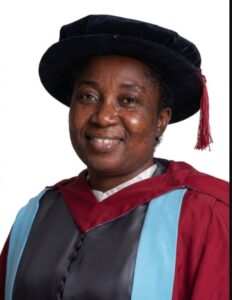
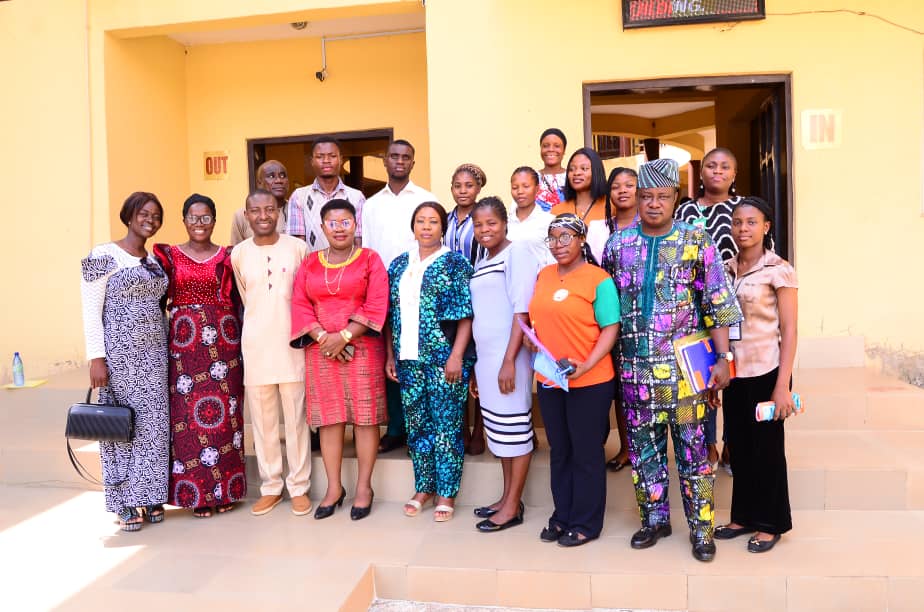
At a TETfund supported workshop organised by the Bamidele Olumilua University of Education, Science and Technology Ikere Ekiti, BOUESTI Institution-Based Research (IBR) Team on Media Advocacy for Gender-Based Violence, under the leadership of Dr. Omowumi Olaseinde, journalists, scholars, researchers and community leaders gathered on Thursday to discuss holistically, issues surrounding the imbalance in media reportage of GBV.
Dr. Olaseinde who explained that the workshop was born out of the need for fair and balanced media representation of gender-based violence, noted that men are often neglected in most media narratives as most representations place a particular gender as perpetrators and the other as victims in Men versus Women approach which often exercebate and escalate GBV.
She noted that the media must mirror issues accurately in a balance way by amplifying cases affecting men as much as those involving women. She encouraged men affected by domestic violence to speak up rather than suffer in silence.
Resources persons including Mrs. Olufisoye Adenitan, a Principal Editor at FRCN Positive FM Akure Ondo State who was also one of the resource persons, described the lack of reportage on Gender-based violence against men as a “conspiracy of silence.”
She argued that societal expectations had often discouraged men from coming forward to speak about their experiences, saying that their had been several cases of women perpetrating GBV against Men.
Meanwhile, a Clinical Psychologist at Ekiti State University Teaching Hospital (EKSUTH), Dr. Adedotun Ajiboye, had outlined the various severeness of mental and medical consequences of domestic violence on men, including substance abuse, deteriorating health, broken relationships, and, in extreme cases, suicide.
He called for increased media engagement in ensuring balance reporting of GBV cases.
Speaking at the workshop, the State Commissioner for Women Affairs and Social Development Mrs Peju Babafemi, reiterated the commitment of the Ekiti State Government to eradicating gender-based violence (GBV), with various policies and laws meant to facilitate and ensure access to justice and necessary legal support for survivors irrespective of gender.
Speaking through her representative, a legal practitioner Barr. Rita Ilevbare, Babafemi highlighted the state’s efforts in providing rehabilitation and support for victims of domestic violence noting that about 30 rescued victims, whom were all girls had recently been placed in top-tier boarding schools across the state as part of government’s intervention programs
She called for a concerted effort in preventing GBV and providing supports for survivors.
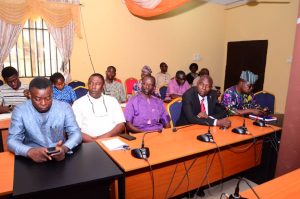
The workshop was attended by students, journalists, lecturers, and other stakeholders, all of whom expressed the need for continuous advocacy to bridge the gender gap in domestic violence reportage.
Damilola Omotoso and Opeyemi Seweje are both Students of Mass communication at the Bamidele Olumilua University. Ikere Ekiti