FUOYE Hosts Global Conference on Artificial Intelligence, Redefines Future of Management in Africa
By Chinedu Okafor & Toye Fisher
The Federal University Oye-Ekiti (FUOYE) has once again positioned itself as a beacon of intellectual leadership and innovation in Africa’s evolving development landscape.
This was evident as the university’s Faculty of Management Sciences hosted its 2025 International Conference, themed “Artificial Intelligence: Disruptions in Management and Emerging Issues in Africa.”
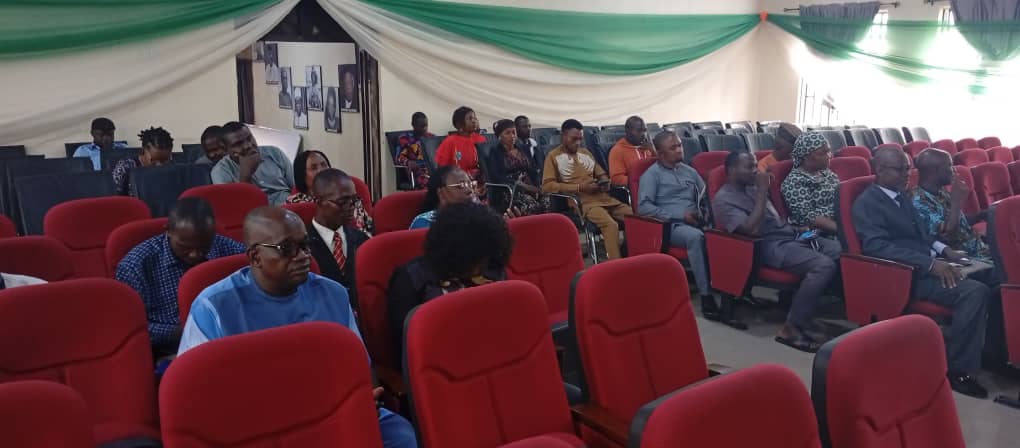
For three days from October 28 to 30, 2025 the serene Oye-Ekiti campus became a melting pot of ideas and perspectives as eminent scholars, policymakers, and industry professionals from within and outside Africa converged to examine how Artificial Intelligence (AI) is redefining management, governance, and decision-making on the continent.
Declaring the conference open, the Vice Chancellor, Professor Sunday Abayomi Fasina, represented by the Deputy Vice Chancellor (Administration), Professor Tajudeen Opoola, reaffirmed FUOYE’s commitment to advancing knowledge through research and technological innovation.
He noted that the university remains a driving force in shaping national and continental conversations on technology-driven management and sustainable development.
In his welcome address, the Dean of the Faculty, Professor Babatunde Afolabi, described the conference as a platform to rethink how people, processes, and organizations are managed in the digital age.
He emphasized that AI is not just revolutionizing business systems but also redefining leadership, governance, and human capital development across Africa. He added that the conference served as “a platform for connection, collaboration, and innovation,” designed to bridge academic discourse with practical solutions for growth.
Chairman of the Local Organizing Committee, Dr. Babatunde Olusanya, highlighted FUOYE’s rising reputation as a center for forward-thinking research and dialogue. He explained that the gathering was conceived to stimulate high-level discourse on how AI can enhance productivity, drive innovation, and strengthen decision-making across sectors.
Beyond academic discussions, he said, the goal was to translate knowledge into actionable policies reflecting Africa’s unique socio-economic realities.
One of the high points of the conference was the keynote presentation by Professor Owolabi Mukaila Bakre of the University of Riyadh, Saudi Arabia, titled “Globalization and Western Accounting Regulatory Framework as Smokescreen for Trans-Organized Financial Crime: Nigeria as a Case Study.”
Professor Bakare challenged existing global accounting systems dominated by Western institutions, arguing that frameworks such as the International Financial Reporting Standards (IFRS) and International Public Sector Accounting Standards (IPSAS) often perpetuate inequality and enable capital flight from developing economies.
He urged African nations to develop homegrown regulatory models suited to their socio-economic contexts, stressing that true progress in the digital economy depends on ethical governance, institutional strength, and accountability. Professor Bakare also cautioned that while AI can enhance transparency, it could also be manipulated by global auditing firms to conceal financial irregularities.
He, therefore, called for ethical regulation to ensure AI serves justice and accountability rather than exploitation.
Another keynote address delivered by Professor Taiwo Asaolu, Vice Chancellor of the University of Ilesa (represented by Professor Adaramola), offered a broader perspective on AI’s transformative impact on management.
Describing AI as “a living force,” he noted that it has redefined how organizations strategize, plan, and compete. Citing Rousseau and Movic (2021), he defined AI as the design of computer systems capable of performing tasks that require human intelligence, such as reasoning, learning, and decision-making.
Professor Asaolu emphasized that AI is driving efficiency through predictive analytics, automation, and data-based decision systems in finance, logistics, and human resource management. He, however, cautioned that Africa must address critical gaps in infrastructure, regulation, and ethics to deploy AI responsibly and sustainably.
Also speaking, Professor Sunday Adebisi, Director of the Entrepreneurship and Skills Development Centre at the University of Lagos, emphasized that AI should not be perceived as a threat but as a powerful tool to improve managerial efficiency.
He noted that both management and AI share a common foundation in decision-making, warning that managers who fail to understand AI’s role in modern administration risk being displaced by technology.
He added that the COVID-19 pandemic accelerated digital transformation globally, leaving Africa with no choice but to build digital literacy, foster ethical governance, and promote innovation that reflects local realities. For Africa to benefit fully from AI, he said, the continent must prepare its institutions and workforce to engage with emerging technologies productively.
As the three-day conference drew to a close, one consensus emerged, Africa must not remain a passive consumer of technology but an active participant in shaping the global AI agenda. Participants agreed that technology should not only drive efficiency and competitiveness but must also advance social equity, transparency, and sustainable development.
The FUOYE 2025 International Conference thus reaffirmed the university’s standing as a hub for transformative ideas, a place where scholarship meets purpose, and where the future of African management is being reimagined through the lens of innovation and Artificial Intelligence.