NISD Partners Ekiti Ministry to Engage Development Stakeholders on Future of Social Protectio
By Yemi Olajutemu
Ado Ekiti
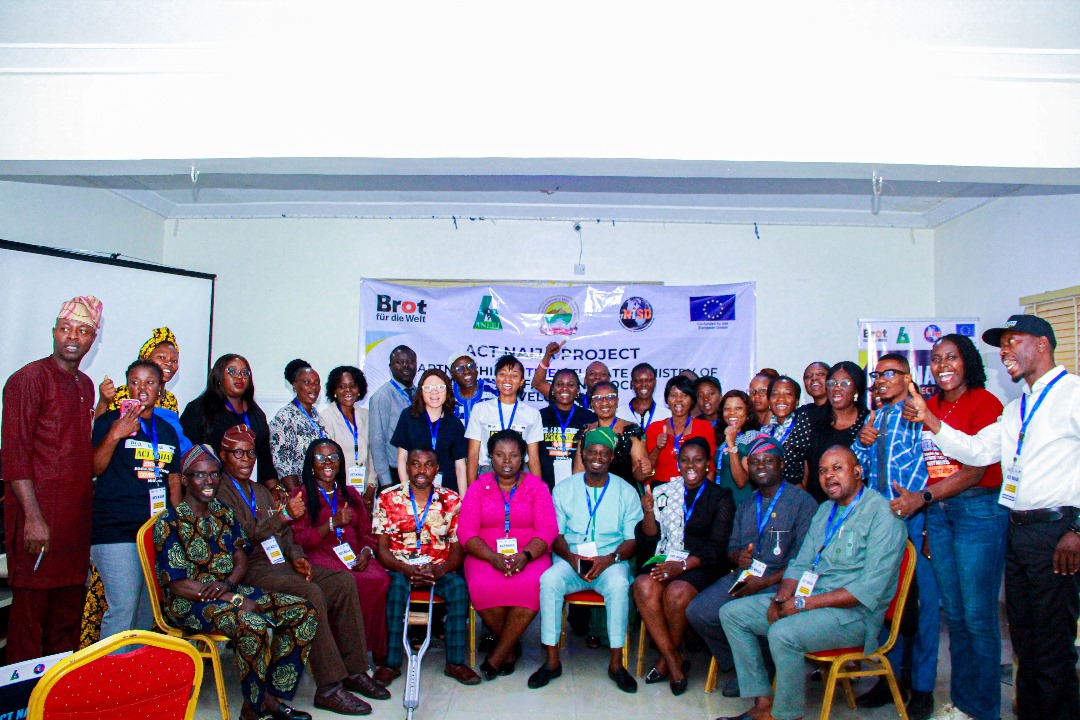
Stakeholders drawn from government ministries, civil society organizations, youth groups, women associations, human rights bodies, and the media gathered in Ado-Ekiti on Tuesday for a crucial dialogue on social protection interventions and implementation in Ekiti State.
The event, organized by the New Initiative for Social Development (NISD) in collaboration with the Ekiti State Ministry of Women Affairs and Social Development, was themed “Strengthening Social Protection Systems in Ekiti State: Building Inclusive, Accountable, and Resilient Frameworks.”
The dialogue provided a platform for policy discussions on strengthening social welfare mechanisms and promoting inclusive governance, aiming at reshaping public understanding of social protection, not merely as a safety net, but as a transformative instrument for equity, empowerment, and sustainable development.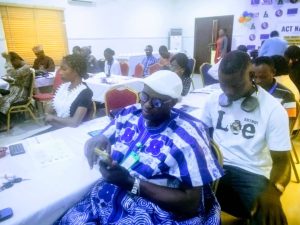
The forum attracted top officials from both state and federal agencies, alongside development partners and community-based organizations.
Delivering her keynote address, the Special Adviser to the Governor on Women Affairs and Social Development, Mrs. Olapeju Babafemi, commended NISD for its steadfast commitment to strengthening social protection systems in the state.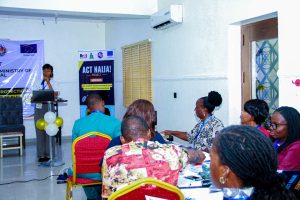
She said the initiative aligns perfectly with Governor Biodun Oyebanji’s Shared Prosperity Agenda, which focuses on social inclusion, poverty reduction, and empowerment of vulnerable citizens.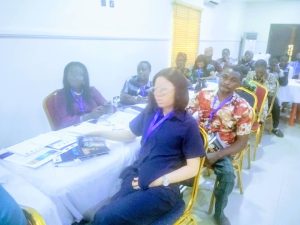
Babafemi described the dialogue as timely, especially in an era where economic shocks and global disruptions have intensified social vulnerabilities. According to her, Ekiti State remains at the forefront of efforts to institutionalize social protection policies that prioritize the poor, the aged, and marginalized populations.
She noted that through the Social Investment Coordinating Agency (SSICA), the state has rolled out several targeted programmes aimed at reducing poverty and inequality, promoting financial inclusion, and improving access to basic services. The programmes, she said, were deliberately structured to empower women and youth, enhance human capital, and promote decent livelihoods.
The Special Adviser revealed that Ekiti recently recorded the lowest food inflation rate in Nigeria, according to the National Bureau of Statistics, attributing the feat to Governor Oyebanji’s sustained investments in agriculture and rural development. She cited the establishment of Ile Eye Aggregation and Food Company Limited and the Ounje Ekiti retail outlets as initiatives that have improved food availability and affordability for citizens.
Babafemi further stressed the importance of adopting a gender-sensitive approach to social protection. She explained that Ekiti State prioritizes the needs of women, girls, the elderly, persons with disabilities, and the less privileged, ensuring that they are not just beneficiaries but active participants in decision-making processes.
The Special Adviser highlighted the state’s ongoing collaboration with the World Bank–assisted Nigeria for Women Project Scale-Up (NFWP-SU) and the Adolescent Girls Initiative for Learning and Empowerment (AGILE). These projects, she said, have provided educational, economic, and psychosocial support for women and adolescent girls, particularly those recovering from abuse or living in vulnerable conditions.
She also noted that the Ministry of Women Affairs, in partnership with the Office of the Wife of the Governor, has implemented several impactful initiatives, including the provision of material and financial support to indigent women, widows, and survivors of gender-based violence. Microfinance schemes and skills acquisition programmes have also been introduced to boost women’s economic independence.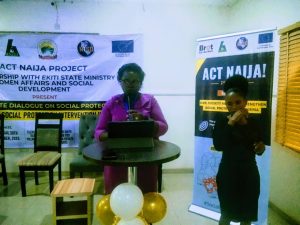
According to her, the Oyebanji administration remains committed to the welfare of the elderly and retirees, adding that the state has so far disbursed over ₦7.6 billion in gratuities and continues to prioritize the regular payment of pensions. This, she emphasized, underscores the administration’s commitment to social justice and inclusivity.
While acknowledging progress made so far, Babafemi maintained that more work remains to be done. She called for increased coordination among implementing agencies and better synergy with development partners to ensure that interventions reach the most vulnerable.
She expressed optimism that the dialogue would produce actionable recommendations that would further strengthen social protection delivery and foster inclusive growth in the state. Mrs. Babafemi reaffirmed that the Oyebanji administration remains resolute in its commitment to improving the lives of citizens, especially those at the bottom of the social pyramid. She noted that the state would continue to build on the outcomes of the dialogue to enhance resilience, inclusivity, and accountability within its social protection framework.
In his remarks, the Permanent Secretary of the Ministry of Budget and Economic Planning, represented by the State Coordinator of the State Operations Coordinating Unit (SOCU), emphasized the importance of inclusivity in budgeting and financing. He noted that the government recognizes the limitations of public funding and therefore values its partnerships with development actors such as ACT-Nigeria and the NISD.
He explained that many Nigerians are struggling to meet basic needs, especially following the removal of the fuel subsidy, which has pushed more households into extreme poverty. The government, he said, must prioritize policies that cushion the effects of economic hardship on the most vulnerable groups.
He pointed out that the Ekiti Social Register, developed since 2013, remains a key tool in identifying and targeting poor households for intervention. Initially supported by partners such as NASCO and the World Bank, the register is now fully funded by the state government and has been expanded to cover all local government areas.
The Permanent Secretary emphasized that a credible and comprehensive social register is crucial for ensuring that poverty alleviation programmes and social investments reach those who truly need them. He reaffirmed the ministry’s commitment to maintaining transparency and accountability in managing the register.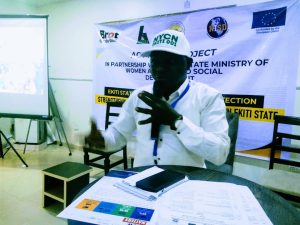
Speaking at the event, Rachel Olori, Programme Officer for Ekiti State at NISD, highlighted findings from the organization’s recent baseline survey, noting that while social protection systems exist in Nigeria, public awareness remains very low.
Olori explained that many Nigerians are unaware of the scope, benefits, and eligibility criteria of social protection programmes. This lack of awareness, she said, undermines access and prevents potential beneficiaries from taking advantage of available support systems.
She emphasized that NISD’s goal through this initiative is to bridge the knowledge and access gap by strengthening policy frameworks, improving implementation, and promoting collaboration between government and civil society actors.
According to her, raising awareness and achieving effective implementation cannot be done by one institution alone. “Social protection is a collective responsibility,” she said. “That is why this dialogue is designed to strengthen partnerships across all relevant ministries, departments, and agencies.”
Olori disclosed that NISD plans to embark on a series of awareness and engagement activities involving key stakeholders such as the National Orientation Agency (NOA) and the Ministry of Information, to deepen public understanding of social protection policies and benefits.
She reiterated that the dialogue’s central aim is to foster coordination among actors, eliminate duplication, and ensure that interventions are harmonized under a coherent state framework.
Participants at the dialogue engaged in technical sessions focusing on policy, financing, institutional reforms, innovation, and the future of social protection in Ekiti. The discussions emphasized the need for sustainable funding, transparent implementation, and improved data systems.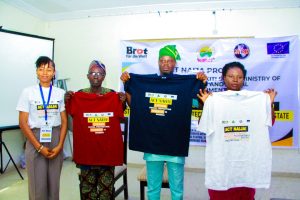
Representatives of the Ekiti State House of Assembly Committee on Social Development, the Coalition of Ekiti Civil Society Organizations, and the Joint Association of Persons with Disabilities also contributed perspectives on ensuring accountability and inclusion in programme delivery.
In their collective resolutions, the stakeholders called for the adoption of a holistic approach that integrates social protection into the state’s economic and development planning processes. They urged stronger collaboration between state and non-state actors to achieve lasting impact while expressing satisfaction with the level of engagement and pledged continued partnership towards realizing an equitable and inclusive Ekiti State.
They call for the adoption of the recommendations presented and a shared commitment to advancing a people-centered social protection agenda that leaves no one behind.