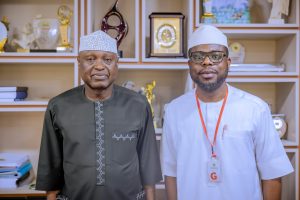
Former Nigerian President, Muhammadu Buhari, has passed away at the age of 82, leaving behind a legacy marked by service, sacrifice, and a lifetime of national significance.
The quietness of Sunday afternoon was broken by a somber message from his former spokesperson, Garba Shehu, who took to X (formerly Twitter) to announce the former leader’s death. “The family of the former president has announced the passing on of the former president, Muhammadu Buhari, GCFR, this afternoon in a clinic in London. May Allah accept him in Aljannatul Firdaus, Amin,” the statement read.
Buhari died in a London clinic where he had been receiving medical attention after a prolonged but undisclosed illness. Family sources revealed that he had recently been moved out of the intensive care unit, sparking hope of recovery, but his condition deteriorated unexpectedly in the final days.
The former president had embarked on what was initially described as a routine medical visit abroad but remained under close observation for weeks. Despite the silence surrounding the nature of his illness, those close to him remained optimistic until his health took a sudden turn.
Born in 1942 in Daura, Katsina State, Buhari was a career military officer who first seized national attention as Nigeria’s military ruler from 1983 to 1985. Three decades later, he returned to power through the ballot box in 2015, marking a historic political comeback and a rare democratic transition for a former head of state.
His presidency was defined by a tough anti-corruption drive, economic restructuring, and relentless military campaigns against Boko Haram and banditry in northern Nigeria. While his time in office attracted both applause and criticism, few could doubt his influence on Nigeria’s political landscape.
To many, Buhari was more than a politician; he was a symbol of discipline, austerity, and fierce patriotism. Tributes are already pouring in from across the country and beyond, reflecting the weight of his departure on a nation he once led twice—first with command and later with a constitution.
As Nigerians mourn, Buhari’s journey from a young soldier to a two-time leader of Africa’s largest democracy will be remembered for its complexities, contradictions, and convictions. His death closes a significant chapter in Nigeria’s history.