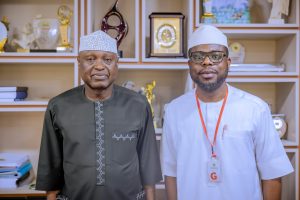
Rights, Equality and Empowerment: How Oyebanji, Babafemi are Weaving New Narratives for Ekiti Women
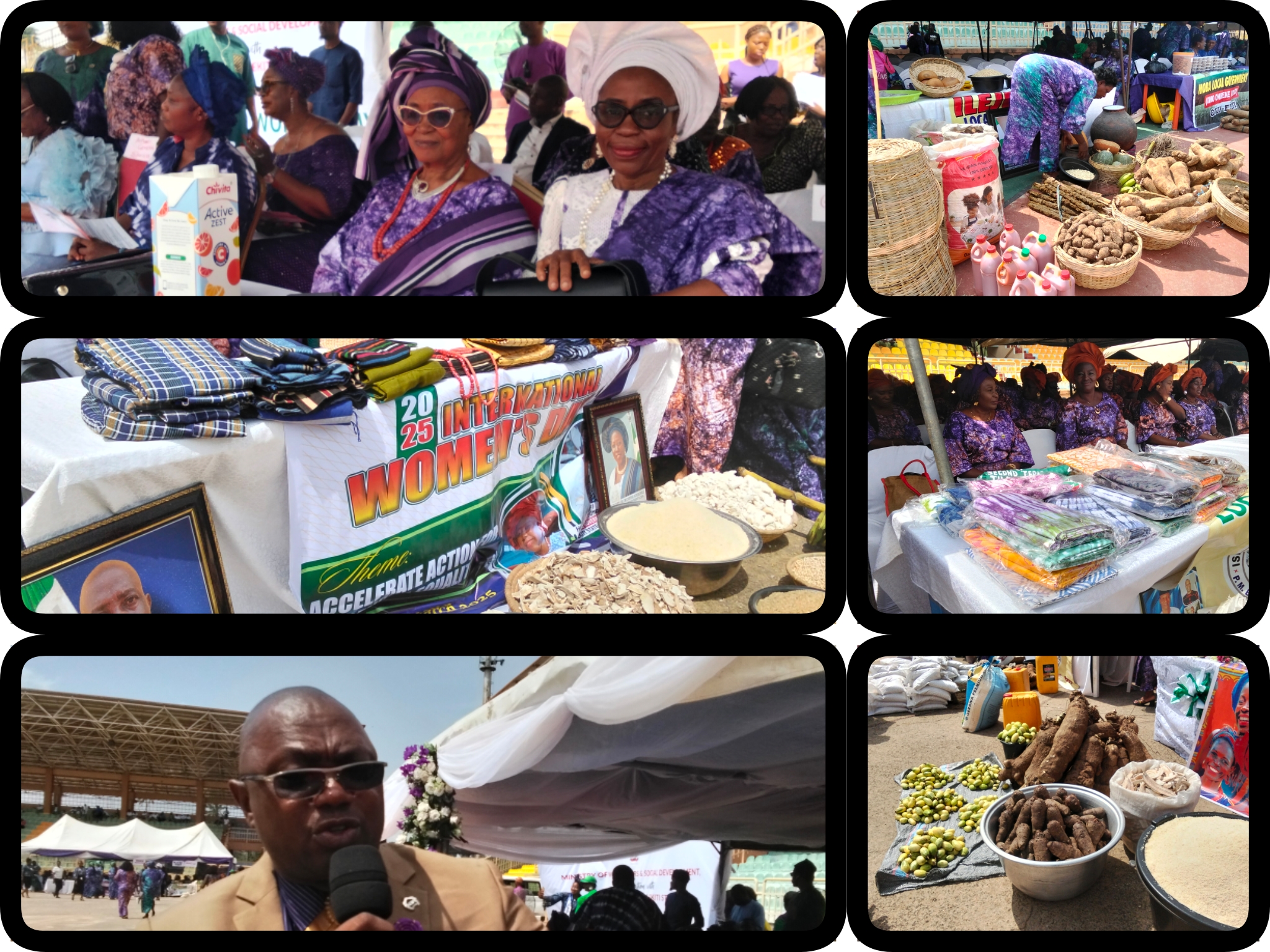
In continuation of its vibrant display of advocacy, culture, and commitment to gender equality, the Ekiti State Government marked International Women’s Day 2025 with a grand celebration that demonstrated the power of micro-feminism in shaping a more inclusive society.
Held at the state pavilion in Ado-Ekiti, the event was not just a ceremonial gathering but a testament to the government’s relentless drive to empower women and enhance gender balance.

Themed “For All Women and Girls: Rights, Equality, and Empowerment,” the event, spearheaded by the Ministry of Women Affairs and Social Development in collaboration with the Office of the First Lady, brought together policymakers, scholars, and women from diverse backgrounds to engage in enriching discussions, workshops, and cultural showcases.
Beyond discussions and exhibitions, the event resonated on a deeper level. The women gathered did not just listen to speeches—they engaged, they networked, and they inspired one another.
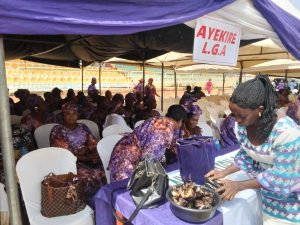
From the onset, the atmosphere was electric with anticipation. Women from all the sixteen local government areas and LCDAs filled the ten thousand capacity pavilion to brim, participating in a series of impactful seminars, which began with a lecture by Professor Babatunde Olofinbiyi of Ekiti State University’s College of Medicine.

Addressing an attentive audience, he delved into the pressing issue of stress management among women, emphasizing the multi-dimensional pressures they face in balancing careers, family, and societal expectations.
Mrs. Olufunke Adetoye, matron of the Funmilayo Adunni Olayinka Diagnostic and Wellness Center, followed with an insightful discussion on the prevention and management of terminal diseases. She emphasized the need for women to take control of their health through proactive screening, balanced nutrition, and mental wellness strategies.
The highlight of the intellectual engagements was the keynote lecture by Dr. Yemisi Afolabi, a gender and development studies expert from Ekiti State University. She enlightened the audience on the legal and social rights of women, urging them to demand equity and seize available opportunities for advancement.
The narrative of gender equality in Ekiti is not one of mere rhetoric. It is a lived experience, backed by policies and initiatives that actively uplift women.
At the heart of the celebration was the sound advocacy of Dr. (Mrs.) Peju Babafemi, the Ekiti State’s Commissioner for Women Affairs.
In her address, she reaffirmed the state’s commitment to creating an enabling environment where women thrive lauding the various effort f the current administration in women empowerment, particularly, the initiatives of the first lady.
As Dr. Babafemi noted, “A gender-balanced society does not just benefit women; it enriches the entire community. When women thrive, economies grow, families prosper, and societies become more just.”
“Our government believes in the power of women,” Dr. Babafemi declared. “Through initiatives such as the Adire Ekiti Hub and the Widows, Aged, Orphan Hope (WAOH) Support Foundation, we are not just talking about empowerment—we are actualizing it.”

The Adire Ekiti Hub, a flagship initiative, has been a game changer for local women entrepreneurs, offering training in traditional textile production while ensuring financial independence. The WAOH Support Foundation, on the other hand, has provided critical support for some of society’s most vulnerable women, ensuring they have access to economic opportunities and social services.
She urged stakeholders, civil society organizations, development partners, and private institutions to join hands with the government in fostering policies that support women’s rights and economic empowerment, working collaboratively to expand opportunities for women across the state.
Ekiti’s First Lady, Dr. Olayemi Oyebanji, took to the stage, commending the Women Affairs Ministry for its dedication to advancing women’s rights. She emphasized that skill acquisition programs and economic empowerment schemes have played critical role in breaking cycles of poverty among women in the state.
Adding her voice to the advocacy, Deputy Governor Monisade Afuye praised the government’s progressive stance on gender inclusion. She reaffirmed that Ekiti State remains committed to policies that ensure equal representation in governance, business, and social development.
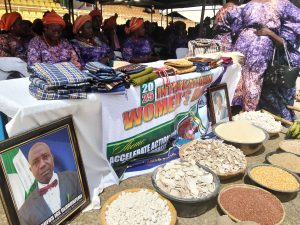
The event also saw a dazzling exhibition of locally made Adire fabrics, a visual representation of women’s creative ingenuity and the success of the state’s economic empowerment programs. As models walked the pavilion in vibrant, hand-dyed textiles, they showcased not just fashion but the resilience and enterprise of Ekiti women.

As the curtains fell on the day’s celebrations, the message was clear: Ekiti is setting the pace for gender inclusivity, proving that meaningful change begins at the grassroots.
The grand finale featured a cultural performance by the Ekiti Cultural Troupe, a fitting tribute to the strength and resilience of the state’s women. Traditional songs and dances echoed through the pavilion, reinforcing the essence of the day—women are the backbone of society, and their empowerment is non-negotiable.
The International Women’s Day event in Ekiti was not just a moment of celebration; it was a clarion call to action. With sustained commitment from the government and society, the vision of a truly gender-equal future is within reach. Ekiti’s women are not waiting for the world to change—they are leading the charge, one empowered step at a time.